Understanding the Key Differences Between Commercial and Office Cleaning Services in Vancouver
- Nicholas Menezes
- Nov 27, 2025
- 12 min read
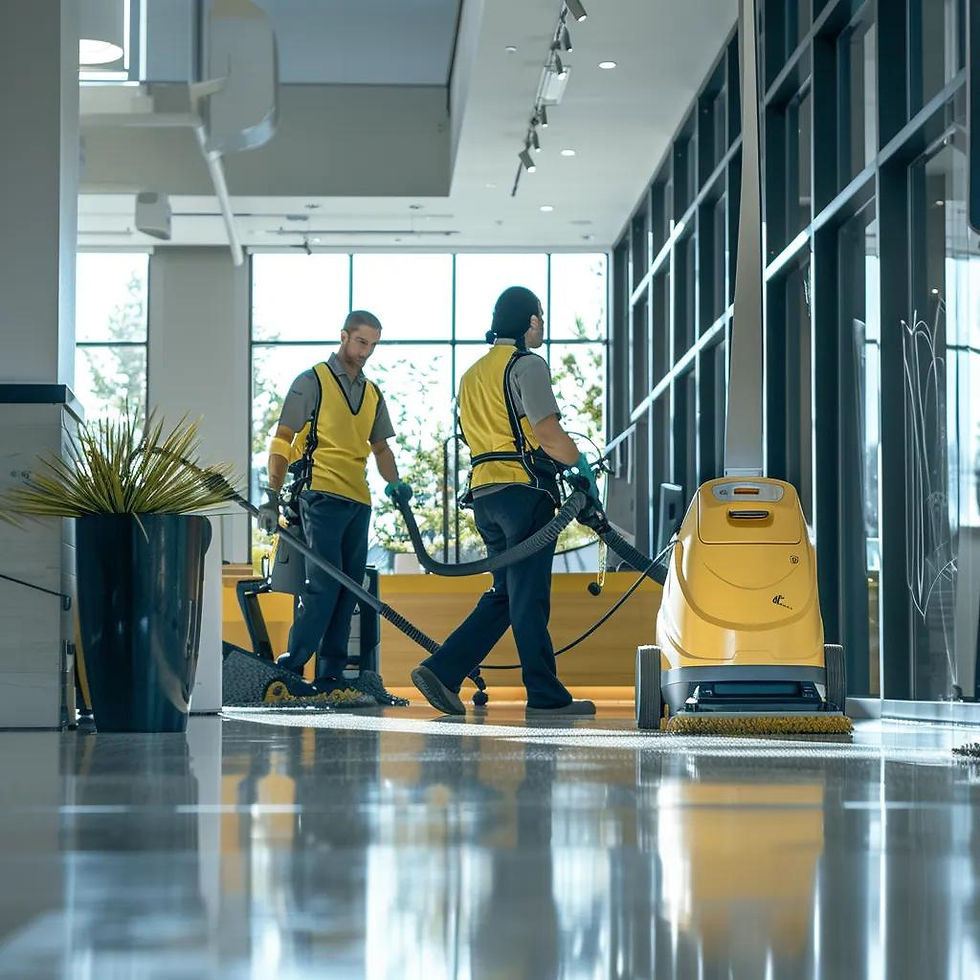
Commercial and office cleaning serve different purposes, and choosing the right one matters for your Vancouver business. Commercial cleaning covers a wide range of non-residential sites and follows industry-specific protocols to manage risks and compliance. Office cleaning targets daily hygiene and workspace upkeep to keep staff healthy and productive. In Vancouver’s rainy climate—where moisture, mold risk, and coastal salt can affect surfaces—those differences influence schedule, scope, and supplies. Below we explain what commercial and office cleaning include, the equipment and training that set them apart, and practical tips for picking the right provider in Vancouver. You’ll find local examples, a quick comparison table, and clear criteria to evaluate quotes so you can match service levels, schedules, and pricing to your facility’s needs.
What is commercial cleaning and what does it cover in Vancouver?
Commercial cleaning is professional maintenance for non-residential buildings. It combines tailored task lists, heavy-duty equipment, and certified procedures to keep sites sanitary, compliant, and protected over time. The main advantage is scalable, regulated cleanliness across larger or specialized properties. In Vancouver, commercial cleaning also accounts for local conditions—frequent rain, coastal salt air, and the higher mold/mildew risk—so teams often use protective treatments and more frequent maintenance in affected areas. Restaurants, retail stores, warehouses, and clinics typically require commercial crews trained in safety and industry standards to prevent cross-contamination and keep customer-facing spaces presentable and compliant. Below we map common industries to typical tasks and equipment to show how broad commercial services can be in the region.
Matching equipment and protocol to a site’s risks is how commercial cleaners protect people and assets. The next section gives concrete examples showing why specialization matters.
How does commercial cleaning serve different Vancouver industries?
Commercial cleaning adapts to each sector by applying focused tasks and controls based on health, safety, and customer expectations. In hospitality, teams handle heavy kitchen degreasing, hood and exhaust cleaning, and frequent restroom sanitation to meet public-health rules. Retail focuses on floor care and clean displays to protect merchandise and brand image. Medical clinics and labs require stronger sanitization, HEPA filtration, and site-specific waste handling to limit infection risk. Warehouses need industrial floor scrubbing and dust control to protect inventory and equipment. These tailored protocols lower liability, keep operations running, and protect staff and customers. Knowing these differences helps facility managers pick vendors with the right certifications and experience for their sector.
Those industry tasks rely on specific tools and trained operators; next we outline the equipment commercial teams typically bring.
What specialized equipment is used in commercial cleaning?

Commercial sites often require heavier, purpose-built equipment to deliver consistent, efficient results at scale. Common gear includes industrial floor scrubbers for large hard surfaces, HEPA-filter vacuums to capture fine particles and allergens, high-pressure extractors for deep carpet cleaning, and disinfectant sprayers for rapid surface coverage during outbreaks. Teams also use microfiber systems, color-coded kits to prevent cross-contamination, and chemical dosing systems to ensure safe disinfectant concentrations. Proper WHMIS training, equipment handling, and site-specific safety procedures are essential to use this equipment safely and effectively. Recognizing when your facility needs this level of capability helps you budget correctly and pick the right vendor.
That heavier equipment contrasts with the lighter tools used for regular office cleaning, described next.
What defines office cleaning and what are typical tasks in Vancouver offices?
Office cleaning is a focused subset of commercial cleaning that concentrates on daily upkeep of workspaces to support employee health, productivity, and a neat, professional look. It runs on consistent routines—dusting, vacuuming, trash removal, restroom sanitation, and breakroom cleaning—that reduce allergens and surface contamination. The result is fewer sick days and a safer workplace. In Vancouver offices, entryway care and moisture control are especially important during rainy months, so providers commonly include mat cleaning, floor treatments, and humidity-control practices in restrooms. Office contracts vary by frequency—from nightly cleans to weekly deep-clean add-ons—so you can scale service to occupancy and use. The checklist below shows routine tasks usually included in standard office packages to help you choose the right level of service.
Office maintenance scales with business size and foot traffic, which guides scheduling and frequency decisions discussed next.
Which routine maintenance tasks are included in office cleaning?

Standard office contracts bundle core tasks that keep workspaces clean and comfortable on a predictable schedule. Typical inclusions are vacuuming and mopping floors, dusting horizontal surfaces and light fixtures, emptying and sanitizing trash and recycling bins, disinfecting and restocking restrooms, and cleaning shared areas like kitchens and meeting rooms. Optional services often include carpet shampooing, window cleaning, upholstery care, and periodic deep disinfection; these are scheduled based on traffic and specific risks like medical visits or on-site food service. A clear task list in the contract reduces scope creep and makes vendor comparisons straightforward. Knowing what’s standard versus optional helps you compare proposals more accurately.
Routine tasks are one piece of the scheduling puzzle; the following subsection recommends frequencies based on office size and function.
How often should office cleaning be scheduled for Vancouver businesses?
Frequency depends on office size, employee density, and local climate factors that increase wear and microbial growth. Small, low-traffic offices or mostly remote teams often need weekly or biweekly visits with a monthly deep clean. Medium and large offices with daily staff presence usually need nightly cleaning plus periodic deep maintenance like carpet extraction or high-touch disinfection. High-contact environments—shared desks, frequent visitors, or on-site food—benefit from daytime wiping of high-touch surfaces and overnight comprehensive cleans to reduce illness transmission. Vancouver’s wet season also calls for more frequent entryway and floor maintenance to manage salt and moisture, which can speed surface wear and increase slip risk. These guidelines help you choose between hourly, per-visit, or contract models that match your priorities and budget.
Scheduling choices affect cost and contract structure, which we compare next.
What are the key differences between commercial and office cleaning services?
Commercial and office cleaning diverge by scope, equipment, staff training, frequency, and cost drivers. Commercial cleaning generally supports larger or specialized facilities—restaurants, warehouses, medical clinics—using industrial equipment, higher safety training, and variable schedules tied to regulations. Office cleaning focuses on daily hygiene and employee-facing spaces with lighter tools and regular recurring schedules; it’s a cost-effective way to keep workplaces presentable. The table below summarizes the main contrasts so you can quickly see how scope, training, and costs differ.
Comparing these attributes makes it easier to spot what matters in vendor proposals and which capabilities you should prioritize for your facility.
Service Aspect | Commercial Cleaning | Office Cleaning |
Typical Facility Types | Restaurants, warehouses, medical clinics, retail | Corporate offices, co‑working spaces, small clinics |
Equipment Used | Floor scrubbers, HEPA vacuums, extractors | Upright vacuums, microfiber mops, portable disinfectant sprayers |
Staff Training Level | Higher (industry protocols, WHMIS, site‑specific safety) | Standard (office hygiene, confidentiality awareness) |
Frequency | Variable (daily, weekly, post‑event, project work) | Regular (daily or nightly, weekly deep cleans) |
Primary Cost Drivers | Equipment rental, hazardous waste handling, specialty chemicals | Labor hours, cleaning frequency, optional add‑ons |
This table highlights the elements that drive price and contract terms. Below we break down equipment, training, and cost models in more detail and show how local providers translate these services into scalable offers for Vancouver businesses.
Locally based providers often package these service categories to fit Vancouver’s mix of boutiques, hospitality venues, and tech offices. Some emphasize transparent hourly pricing and quick quotes to simplify procurement. For example, a regional operator advertises $55 per hour with no extra charges, brings their own supplies, offers the first hour free for recurring cleans, and promises two‑minute quotes—showing how clear value propositions can apply to both commercial and office clients. Those local practices make specialized services more accessible while keeping expectations clear.
Next we explore how scope, equipment, training, and cost/frequency differences play out for Vancouver businesses.
How do scope, equipment, and training differ between these services?
Scope, equipment, and training diverge because facilities have different risks and needs. Scope reflects a site’s functions—commercial properties might include kitchens, storage, or manufacturing areas requiring containment; offices focus on workstations and shared spaces requiring steady hygiene. Equipment ranges from industrial scrubbers and extractors for commercial jobs to portable vacuums and microfiber systems for offices—each tool chosen for efficiency and surface compatibility. Training is a defining factor: commercial crews often need WHMIS knowledge, site‑specific safety protocols, and compliance training; office teams concentrate on confidentiality, professional conduct, and standard cleaning chemistry. Matching these elements to your facility clarifies which provider competencies to prioritize during procurement.
Those differences also explain why pricing and frequency models vary, discussed in the next section.
What are the cost and frequency differences for Vancouver businesses?
Cost and frequency are driven by facility complexity, required equipment, and local factors like travel and climate tasks, which determine whether hourly or contract pricing is more economical. Commercial cleaning is often pricier per visit because of heavy equipment, specialty chemicals, and compliance labor; pricing can be per project, contracted weekly schedules, or hourly depending on complexity. Office cleaning usually follows hourly or per‑visit contracts for regular maintenance, with optional add‑ons billed separately for deep cleans or window work. In Vancouver, extra costs may include moisture management (entryway treatments, dehumidification), rush post‑construction cleans, and travel between Vancouver Island and the Mainland. Weighing frequency discounts, bundled services, or flat‑rate offerings helps you find the best long‑term value.
Decision frameworks that compare these cost and frequency factors make it easier to choose the right provider; that’s covered next.
How to choose the right cleaning service for your Vancouver business?
Picking the right cleaning service starts with a clear, structured evaluation of operational needs, compliance musts, and value. Define your facility’s critical tasks, peak traffic times, and any regulatory requirements (for healthcare or food service), then compare proposals for training, equipment, and scope inclusions. A systematic approach reduces ambiguity in contracts and prevents scope creep or surprise invoices. Use the prioritized checklist below to evaluate commercial versus office cleaning providers objectively.
Once you score vendors against these criteria, map the results to your business size and industry to choose frequency and package options that balance cleanliness and cost.
Key factors to evaluate when choosing a cleaning service: Operational Requirements: Match tasks to your facility’s needs and any regulatory obligations. Training & Safety: Confirm WHMIS, site‑specific protocols, and equipment competency. Scope & Inclusions: Make sure the contract lists what’s included and what’s an add‑on. Pricing Model: Compare hourly, per‑visit, and contract rates — transparency matters. Local Capacity: Factor in travel logistics and local knowledge of Vancouver’s climate impacts.
This checklist helps you ask precise questions during vendor interviews. The next subsection expands on how size and industry affect those choices with practical examples.
What factors should influence your choice between commercial and office cleaning?
Your decision should reflect the facility’s operations, regulatory environment, and desired service level—not a one‑size‑fits‑all solution. Food‑service sites need vendors experienced in kitchen degreasing, exhaust cleaning, and safe chemical handling. Medical or lab spaces require higher‑level sanitization and waste protocols. Offices generally need reliable surface hygiene and shared‑space maintenance. Think about budget and frequency: if you need nightly coverage, choose providers with stable staffing models; if you only need post‑construction deep cleans occasionally, confirm the vendor offers that service. Discuss environmental preferences—like green cleaning options—up front so the provider can confirm product availability and certifications. Prioritizing these factors helps you shortlist vendors who can provide clear, comparable proposals.
These decision points connect directly to how business size and industry change cleaning needs, shown next.
How do business size and industry affect cleaning needs in Vancouver?
Business size and industry determine recommended frequency, labor requirements, and equipment—so tailoring a package avoids overpaying or leaving gaps. Small boutique retailers often need daily floor care and weekly deep cleans, while large manufacturing or warehouse sites require industrial scrubbing and frequent dust control to meet safety standards. Tech offices with dense open layouts benefit from daily high‑touch surface cleaning and regular carpet extraction to reduce allergens and support employee health. Hospitality venues typically need intensive nightly cleaning plus scheduled deep kitchen cleans to meet health‑code requirements. Mapping these examples to expected schedules and budgets ensures cleaning plans are appropriate for scale and regulatory risk.
With scope and cost matched to your operation, you can confidently select providers with the right local capabilities. The next section profiles a local provider and their core offerings as an example.
What makes Your Favorite Home Cleaning a trusted choice for Vancouver cleaning services?
Your Favorite Home Cleaning offers residential and commercial cleaning for homes, apartments, and offices, with practical local know‑how tuned to Vancouver’s climate and business mix. Family‑owned and based in Victoria, BC, they serve Vancouver Island and the Mainland, including Vancouver, bringing regional experience in moisture control, mold prevention, and high‑traffic floor care. Their stated value propositions include transparent pricing at $55 per hour with no extra charges, bringing their own supplies, a first hour free for recurring cleans, and two‑minute quotes—features that simplify procurement and set clear expectations. That combination of local expertise and straightforward pricing can be a strong fit for businesses seeking predictable costs and responsive service.
Below we show how their commercial and office offerings align with common Vancouver business needs and standards.
How do our commercial cleaning solutions meet Vancouver business standards?
Our commercial approach pairs industry‑specific task lists with the right equipment and training for each site, delivering consistent results for restaurants, retail, and office clients. Teams bring supplies and use practices like color‑coded cloths, proper chemical handling, and floor protection to limit cross‑contamination and prevent surface damage—steps that align with general safety expectations in regulated environments. Transparent pricing and quick quotes help facility managers compare options without hidden fees, and the first‑hour‑free offer for recurring clients makes it easy to trial the service with low risk. For Vancouver’s wet season, technicians prioritize entryway maintenance and moisture‑control steps to reduce mold and slip hazards. Choosing a provider with local climate awareness and clear pricing supports safer, cleaner operations.
These service traits offer concrete benefits for office clients, summarized next.
What are the benefits of our office cleaning services in Vancouver?
Office clients get consistent scheduling, predictable costs, and a focus on hygienic routines that support employee health and productivity. Regular tasks—desk and workstation cleaning, restroom sanitization, breakroom upkeep, and floor care—reduce allergens and lower the chance of communicable illness spreading, helping maintain workforce continuity. Bringing our own supplies and offering transparent hourly pricing simplifies logistics and billing, while the first‑hour‑free offer for recurring cleans and two‑minute quotes speed onboarding and decisions. For managers, that means fewer procurement headaches and steadier workplace standards. A reliable office cleaning program delivers noticeable improvements in employee comfort and overall cleanliness.
With those benefits in mind, here are answers to common questions businesses ask when comparing providers.
What are the most common questions about commercial and office cleaning in Vancouver?
Businesses typically ask direct, outcome‑focused questions about differences, costs, and scheduling. Clear answers shorten procurement cycles and lower uncertainty. The FAQ below gives concise, actionable responses to the questions Vancouver businesses ask most often, and suggests follow‑up checks—like confirming training records, equipment lists, and pricing transparency—that you can include in RFPs.
Use these short answers to evaluate proposals and ask targeted questions during vendor selection.
What is the main difference between commercial and office cleaning?
The main difference is scope. Commercial cleaning covers a broad range of non‑residential facilities with industry‑specific protocols, while office cleaning focuses on routine maintenance of workplace environments. Commercial work often requires heavy equipment and specialized training to handle kitchens, warehouses, or medical spaces; office cleaning emphasizes regular tasks like dusting, vacuuming, and restroom sanitation. Contract structure also differs: commercial jobs may be project‑based or on specialized schedules, while office work is usually scheduled daily or nightly. Knowing this core distinction helps you ask the right questions about equipment, certifications, and pricing.
Is commercial cleaning more expensive than office cleaning in Vancouver?
Commercial cleaning can cost more when a site needs specialized equipment, compliance protocols, or hazardous‑waste handling. The primary cost drivers are equipment, training, and scope complexity. Office cleaning is generally more predictable and cost‑efficient for routine work because it uses lighter equipment and standard procedures—and many providers offer hourly rates or fixed monthly contracts. Frequency affects totals: daily office cleaning adds steady, predictable costs, while episodic commercial projects (post‑construction, deep kitchen cleans) carry higher per‑event fees. In Vancouver, factor in climate‑driven entryway maintenance and travel between Vancouver Island and the Mainland when comparing quotes. Asking for transparent pricing and a written list of inclusions helps you compare offers fairly.
When you’re ready to act, request a clear proposal that lists tasks, frequency, equipment, and any seasonal considerations so you can compare vendors on equal terms. Transparent hourly pricing, supplied materials, and trial offers reduce onboarding friction and set measurable service expectations. The guidance above should help you choose a cleaning program that fits your Vancouver facility while controlling costs and compliance risk.
Frequently Asked Questions
What are the environmental considerations for cleaning services in Vancouver?
Vancouver’s climate—especially moisture and mold risk—shapes cleaning practices. Many services use moisture control measures like dehumidification and specialized floor treatments to prevent mold, particularly during the rainy season. Providers are also increasingly offering eco‑friendly products and methods to reduce environmental impact. Choosing greener options protects the local ecosystem and meets growing customer demand for sustainable business practices.
How can businesses ensure compliance with health regulations through cleaning services?
To maintain compliance, choose providers familiar with industry standards for your sector—such as food service or healthcare. Look for teams trained in protocols like WHMIS and for transparent documentation of cleaning procedures. Regular audits and clear communication about practices help businesses stay compliant and protect staff and customers.
What should businesses look for in a cleaning service contract?
When reviewing contracts, look for clear scope, frequency, and pricing. The contract should list specific tasks included, optional add‑ons, and how often visits occur. Verify the provider’s training and safety protocols and any service guarantees. A well‑defined contract prevents misunderstandings and keeps expectations aligned.
How can businesses assess the quality of a cleaning service?
Ask for references and client reviews, and inquire about training programs and certifications. A trial period lets you observe the team’s efficiency and attention to detail. Also evaluate the provider’s responsiveness—good communication is a strong indicator of reliable service.
What are the benefits of using a local cleaning service in Vancouver?
Local providers understand Vancouver’s unique environmental challenges—moisture control and mold prevention—and can respond quickly for on‑site consultations. Supporting local businesses often results in more personalized service and stronger community ties, which can translate into better long‑term partnerships.
Are there specific cleaning protocols for high‑traffic areas in offices?
Yes. High‑traffic zones like entryways, break rooms, and shared workspaces need more frequent attention—often daily. Protocols usually include disinfecting high‑touch surfaces (doorknobs, light switches, shared equipment) and regular vacuuming and mopping to reduce allergens and dirt. These steps help keep the workplace healthier for everyone.
Conclusion
Knowing the difference between commercial and office cleaning helps Vancouver businesses choose services that fit operational needs, safety requirements, and budgets. The right provider can boost employee productivity, keep your space looking professional, and lower industry‑specific health risks. Start by evaluating your facility’s needs, then request clear proposals that list tasks, frequency, equipment, and seasonal considerations. If you’d like, we can walk you through a tailored recommendation and provide a transparent quote to help you get started.


Comments